


AI-Powered Precision for Neoadjuvant Therapy Planning
Ataraxis Breast helps guide neoadjuvant therapy decision prior to surgery for patients with stage I–III breast cancer across all subtypes. By analyzing morphological features from standard H&E slides together with clinical data, the platform delivers an individual’s likelihood of achieving pathologic complete response (pCR) after neoadjuvant therapy.
Overall pCR likelihood: deeper predictive insight for neoadjuvant decision-making
How do we predict likelihood of achieving pCR?
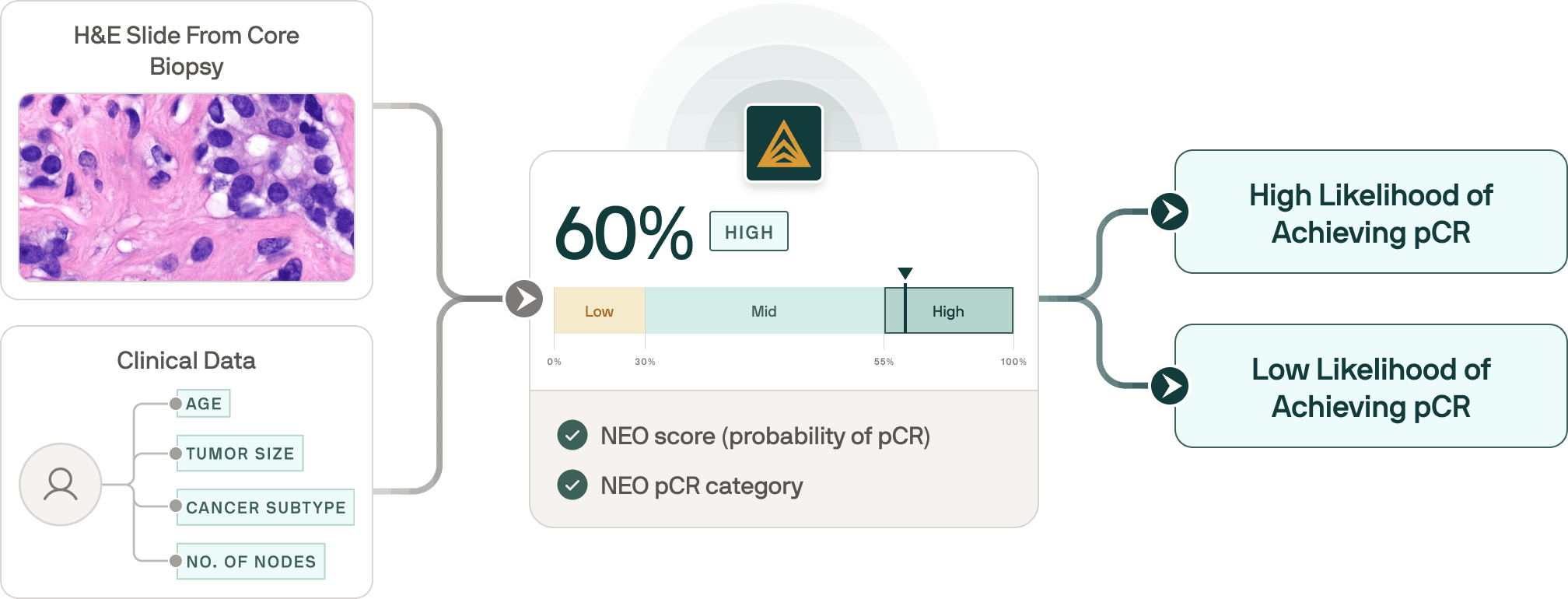
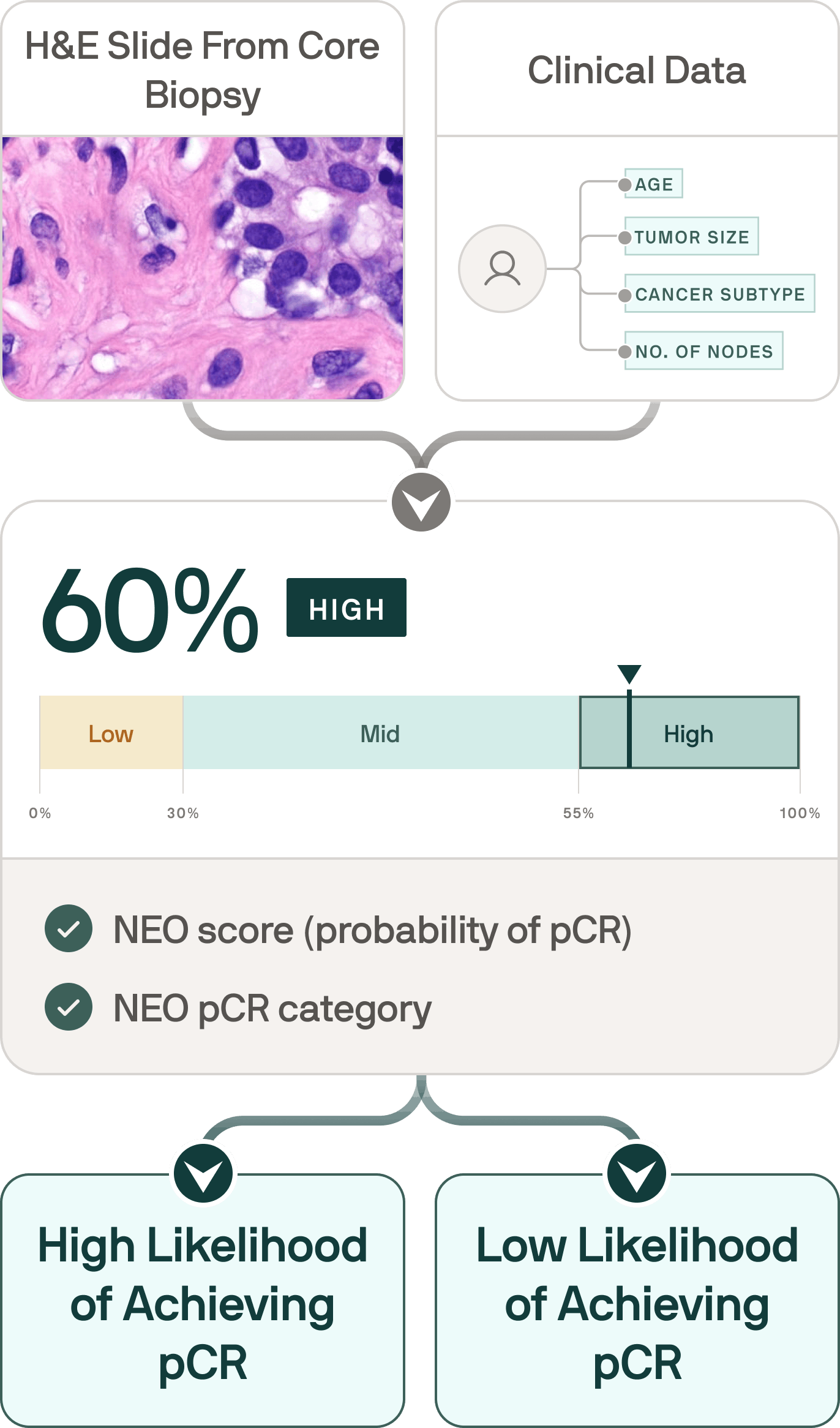
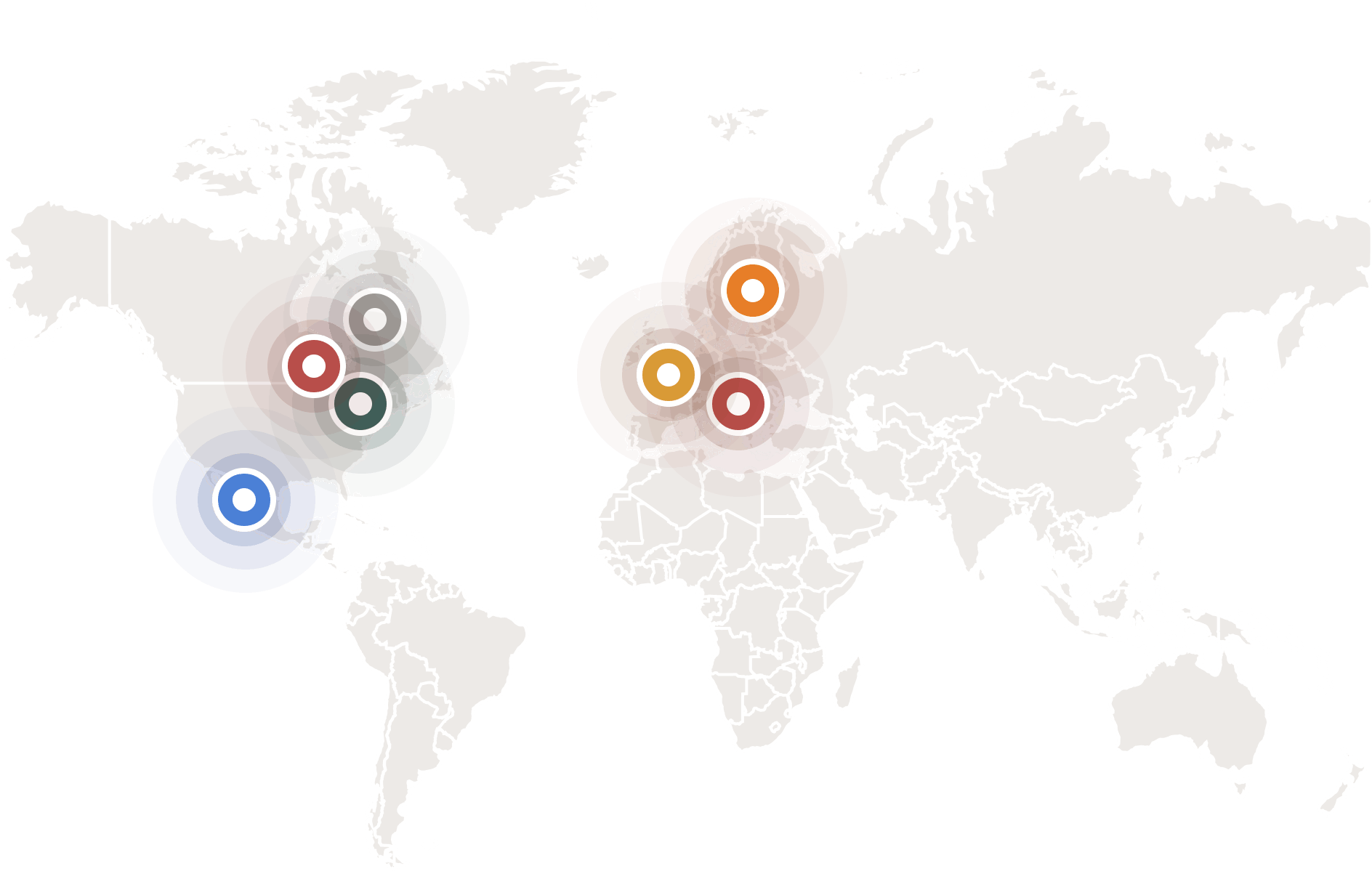
Our neoadjuvant therapy response AI model was trained and evaluated on ~3,000 global patients
Classification of patients into pCR groups based on likelihood of response to neoadjuvant therapy
After generating a patient’s predicted likelihood of pCR, subtype-specific thresholds are applied to classify the result as low, intermediate, or high likelihood. This stratification was evaluated across breast cancer subtypes using real-world datasets from patients treated with contemporary standard-of-care neoadjuvant therapies, including TCHP/THP for HER2-positive disease, KEYNOTE-522–based regimens for TNBC, and neoadjuvant chemotherapy for HR+/HER2-negative disease.
Axillary pCR likelihood for node-positive cases
In addition to receiving a predicted likelihood of achieving pCR, all clinically node-positive (cN+) patients also receive an estimated probability of axillary pCR on their test report, stratified by their pCR risk group (low, intermediate, or high). This information may help inform surgical decision-making by identifying patients who are more likely to achieve nodal clearance after neoadjuvant therapy and who may therefore be candidates for less extensive axillary surgery.

.png)
Learn more about our technology
Make the most informed call for your patients.
How likely is treatment before surgery to eliminate cancer?
Personalized insight to guide your first treatment choice

If you’ve been diagnosed with breast cancer, your doctor may recommend treatment before surgery, called neoadjuvant therapy. It can be an important step, but it’s often hard to know upfront how well it will work.
Ataraxis Breast uses the biopsy slides already collected during your care, plus routine clinical information, to estimate how your cancer is likely to respond. No new procedures are needed.
Our test can be used for early-stage breast cancer across:
- All molecular subtypes, regardless of ER, PR, or HER2 status
- Premenopausal women and postmenopausal women
- Regardless of cancer presence in lymph nodes
I might want this test if...
How do we predict likelihood of achieving pCR?
Our neoadjuvant therapy response AI model was trained and evaluated on ~3,000 global patients
What does pCR mean and why is it so important?
Achieving pCR means that after neoadjuvant therapy, no cancer is found in the breast or lymph nodes at surgery. Patients who achieve pCR usually have:
Knowing your chance of pCR upfront can help you and your doctor choose the treatment plan that fits you best.
